Galbi-jjim
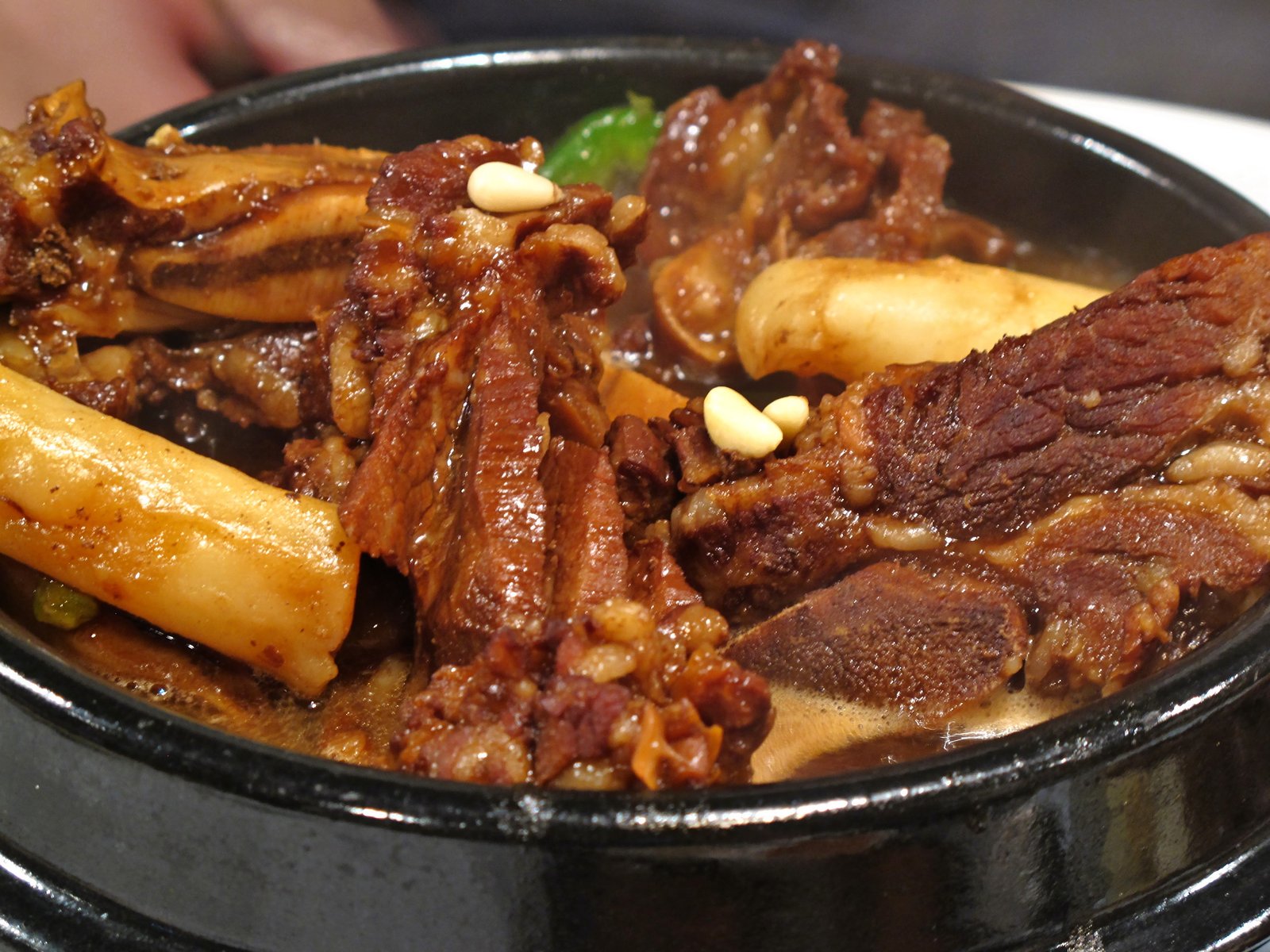
Beef short ribs braised low and slow in soy sauce, Asian pear and garlic with radish, carrot and mushrooms until the meat is ready to slip off the bone: the centerpiece of a Korean holiday table. About 135 minutes for four, including soaking the ribs.
- Time
- 135 min
- Level
- Medium
- Spice
- Serves
- 4
What is Galbi-jjim?
WHAT IT IS
Galbi-jjim is beef short ribs braised slowly in a sweet soy sauce with Asian pear, garlic and ginger, along with big chunks of radish, carrot and mushrooms, until the meat is soft enough to pull off the bone. It's a special-occasion dish in Korea, made for holidays, birthdays and family gatherings.
WHERE IT COMES FROM
It's also called garijjim, from gari, another word for beef ribs. Because ribs cost more than lean meat, the Encyclopedia of Korean Culture counts galbi-jjim as a luxury dish and notes that it sometimes took the place of braised chicken at Chuseok. The Institute of Traditional Korean Food, quoted by The Korea Herald, dates the dish to the mid-1700s, during the Joseon dynasty, and says it was a favorite of royalty.
Sources:Encyclopedia of Korean Culture (갈비찜)The Korea HeraldNational Institute of Korean Language (한식명 표준 번역)
Ingredients
재료Each Korean item has a substitute, in case you can’t get to a store.
Paid links · The store links in this list are affiliate links: K for All earns a commission when you buy through them. Sales, shipping and refunds are handled by each store.
- 3 lb (1.4 kg)Bone-in beef short ribs, cut into 2-inch (5 cm) pieces 소갈비
Substitute: Ask for thick, English-cut short ribs, not thin flanken-cut LA galbi. Boneless short rib or chuck works too; cut the braising time by about 20 minutes.
Any grocer - ½ medium (about ½ cup grated)Korean (Asian) pear, finely grated 배
Substitute: A ripe regular pear or a sweet apple works too. The fruit sweetens the sauce and helps tenderize the meat.
Any grocer - ½ mediumOnion, grated 양파Any grocer
- 10 oz (300 g)Korean radish (mu), cut into 1½-inch chunks 무
Substitute: Daikon works the same way.
Any grocer - 1 largeCarrot, cut into 1½-inch chunks 당근Any grocer
- 4Dried shiitake mushrooms, soaked and halved 표고버섯
Substitute: Soak them in warm water for at least 30 minutes, or use 6 fresh shiitake instead.
Any grocer - 6 (optional)Dried jujubes (Korean red dates), plus a few peeled chestnuts if you like 대추
Substitute: Both are traditional additions that bring a little sweetness. Leave them out if you can't find them.
Search on Amazon Amazon US - 2Scallions, cut into 2-inch lengths 대파Any grocer
- ½ cup (120 ml)Soy sauce 간장
Sempio Korean Soy Sauce, Rich and Delicate · 860 ml
Check price on Amazon Amazon US - ¼ cup (60 ml)Rice wine or mirin 맛술
Kikkoman Manjo Aji-Mirin · 10 fl oz × 4
Substitute: Korean mirim, Japanese mirin or a dry rice wine such as cheongju all work; it softens any meaty smell.
Check price on Amazon Amazon US - 2 tbspBrown or white sugar 설탕In your pantry
- 2 tbspCorn syrup, rice syrup or honey 물엿
Chung Jung One O’Food Corn Syrup · 1.2 kg
Substitute: Stirred in at the end, it gives the sauce its glossy coat. Honey works just as well.
Check price on Amazon Amazon US - 6 cloves (2 tbsp)Garlic, minced 다진 마늘Any grocer
- 1 tspFresh ginger, grated 생강Any grocer
- 1 tbspToasted sesame oil 참기름
Otoki Premium Roasted Sesame Oil · 10.82 fl oz
Check price on Amazon Amazon US - ½ tsp black pepper, and pine nuts or sesame seeds to garnish (optional)In your pantry
-


Method
만드는 법Sources we compared:Korean Bapsang10000recipeMaangchi (2008 recipe, archived)
- 1
Soak the ribs
Trim off any thick pieces of fat. Put the ribs in a large bowl of cold water and leave them for 30 minutes to 2 hours, changing the water once or twice, to draw out the blood. Meanwhile, soak the dried shiitake in warm water, grate the pear and onion, and cut the radish and carrot into chunks.
Round off the sharp edges of the radish and carrot chunks with a peeler. They keep their shape through the long braise and look neat on the platter.
- 2
Parboil and rinse
Bring a large pot of water to a boil, add the ribs and boil for 5–8 minutes, until gray scum rises to the top. Drain, rinse each rib under running water to wash off the scum and loose fat, and wipe out the pot.
Korean cooks usually skip browning the meat. Parboiling is what keeps the braising sauce clean and not greasy.
- 3
Braise in the sauce
In a bowl, mix the grated pear and onion with the soy sauce, rice wine, sugar, garlic, ginger and ½ tsp black pepper. Put the ribs back in the pot, pour the sauce over them and add 2 cups (480 ml) of water. Bring to a boil, then cover, turn the heat down to medium-low and simmer for 40 minutes, stirring now and then so every rib spends time under the sauce.
Short on time on the day? Toss the parboiled ribs with the sauce and keep them in the fridge overnight; the flavor goes deeper. Add the water when you start cooking.
- 4
Add the vegetables
Add the radish, carrot and shiitake, and the jujubes and chestnuts if using. Cover and keep simmering for 30–40 minutes, until a chopstick slides easily into the meat and the radish is tender. Spoon off the fat that collects on the surface.
Keep it at a steady, gentle bubble. On high heat the sauce boils away before the meat is tender, and if it cooks far too long the meat falls off the bones.
- 5
Glaze and serve
Take off the lid, stir in the syrup and turn the heat up to medium-high. Keep spooning the sauce over the ribs until it thickens and turns glossy, 5–10 minutes. Add the scallions and sesame oil, toss gently and turn off the heat. Pile it on a platter, scatter pine nuts or sesame seeds over it and serve with rice.
It tastes even better the next day. Chill it overnight, lift off the hardened fat, and reheat it gently with a splash of water.
Say it in Korean
한국어로 말해 보세요For a galbi-jjim restaurant, or a holiday table at home.
Cookware you’ll need
조리 도구Any heavy pot with a lid works; a Dutch oven is ideal. This is the 5-quart lidded sauté pan we link to.