Bulgogi
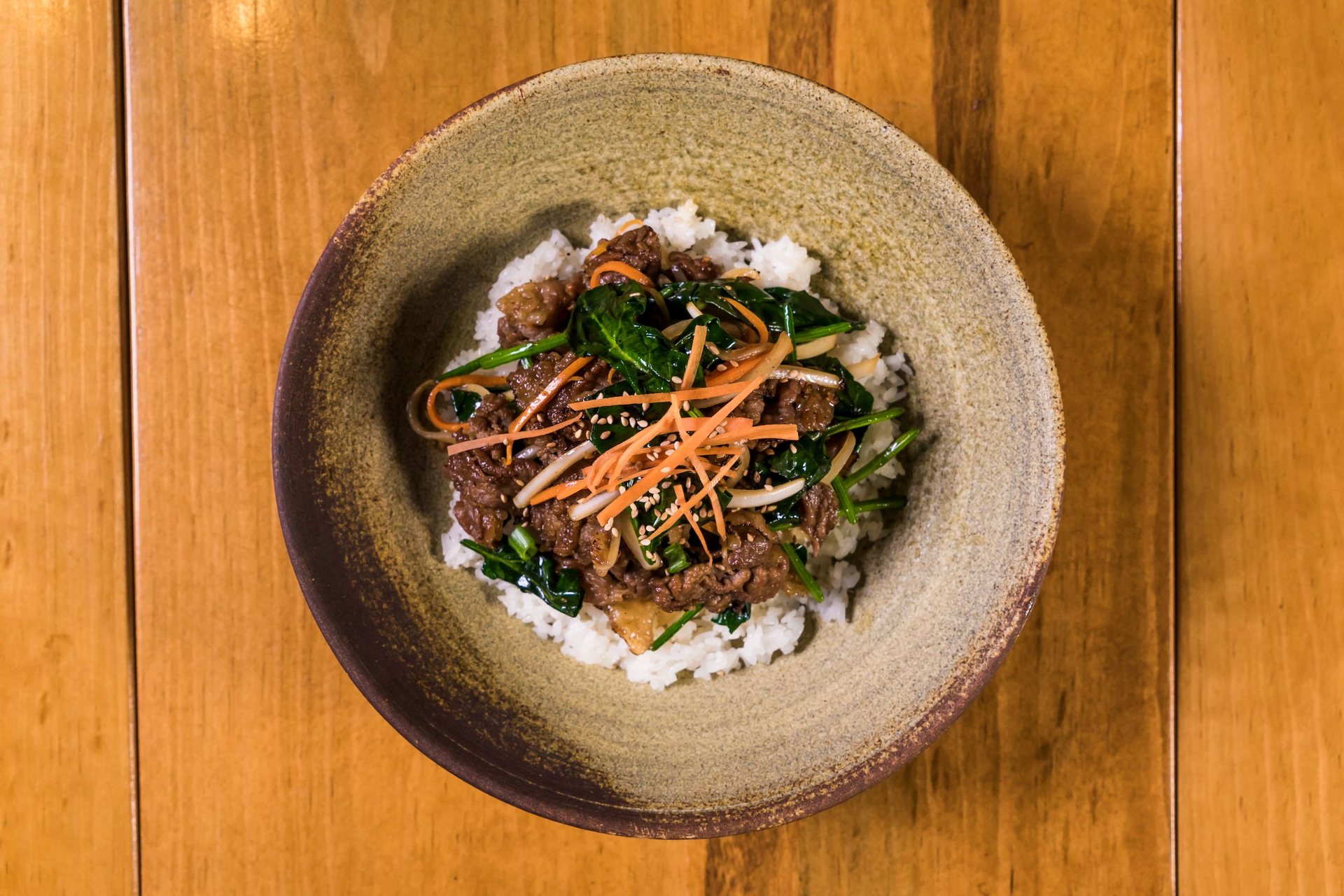
Thin slices of beef marinated in soy sauce, pear, garlic and sesame oil, then seared until the edges caramelize. In the first episode of Reply 1988, a plate of it travels down a Seoul alley as the neighbors swap side dishes at dinnertime. About 50 minutes for four, including a 30-minute marinade.
- Time
- 50 min
- Level
- Easy
- Spice
- Serves
- 4
What is Bulgogi?
WHAT IT IS
Bulgogi is thinly sliced beef marinated in a sweet soy sauce with garlic and sesame oil, then grilled or pan-seared. It is one of Korea's best-known meat dishes, often simply called Korean barbecue abroad.
WHERE IT COMES FROM
Its forerunner is neobiani, broad slices of seasoned beef grilled over charcoal, a name used in the royal court and Seoul's yangban households and first recorded in Siuijeonseo in the late 1800s; some trace Korean grilled meat all the way back to maekjeok, the marinated grilled meat of Goguryeo. The word bulgogi (“fire meat”) is recent: in 1947 the poet Kim Ki-rim wrote that it had just come down from Pyongyang and spread through Seoul almost overnight, and it first appeared as a dictionary entry in 1950.
Sources:Encyclopedia of Korean Folk CultureEncyclopedia of Korean CultureEncyclopedia of Korean Folk Culture (neobiani)
Ingredients
재료Each Korean item has a substitute, in case you can’t get to a store.
Paid links · The store links in this list are affiliate links: K for All earns a commission when you buy through them. Sales, shipping and refunds are handled by each store.
- 1½ lb (700 g)Thinly sliced tender beef, such as rib eye, sirloin or tenderloin 불고기용 소고기
Substitute: Aim for about ⅛ inch (2–3 mm). Korean grocers sell beef pre-sliced for bulgogi; to slice your own, freeze the steak for 1–2 hours first so it cuts cleanly.
Any grocer - ½ cup gratedKorean (Asian) pear, finely grated or blended (about ¼ of a large pear) 배
Substitute: A ripe regular pear or a sweet red apple does the same job: it adds sweetness and helps tenderize the beef.
Any grocer - 1 mediumOnion: grate ¼ for the marinade, thinly slice the rest 양파Any grocer
- 2Scallions, sliced on the diagonal 대파Any grocer
- 5 tbspSoy sauce 간장
Sempio Korean Soy Sauce, Rich and Delicate · 860 ml
Check price on Amazon Amazon US - 3 tbspSugar 설탕
Substitute: Brown or white sugar both work. Swap 1 tbsp of it for honey or rice syrup if you want more shine.
In your pantry - 1 tbspRice wine or mirin 맛술
Kikkoman Manjo Aji-Mirin · 10 fl oz × 4
Substitute: Korean mirim, Japanese mirin or a dry rice wine all work; it takes the edge off any meaty smell.
Check price on Amazon Amazon US - 4 cloves (about 1½ tbsp)Garlic, minced 다진 마늘Any grocer
- 1 tbspToasted sesame oil 참기름
Otoki Premium Roasted Sesame Oil · 10.82 fl oz
Check price on Amazon Amazon US -
- ¼ tsp black pepper, ½ tsp grated ginger (optional) and a little cooking oil for the panIn your pantry
-
- To serve (optional)Ssamjang, with lettuce leaves for wraps 쌈장
Chung Jung One O’Food Ssamjang (Seasoned Soybean Paste), Mild · 500 g
Substitute: Wrap a few slices of bulgogi in lettuce with a dab of ssamjang. Perilla leaves are good in the wrap too.
Check price on Amazon Amazon US - Shortcut (optional)Ready-made bulgogi marinade 불고기 양념
Sempio Korean BBQ Original Bulgogi Marinade · 500 g
Substitute: Use it instead of the homemade marinade in step 2, in the amount the bottle gives.
Check price on Amazon Amazon US


Method
만드는 법Sources we compared:MaangchiMy Korean Kitchen10000recipe
- 1
Separate the beef and slice the vegetables
Peel pre-sliced beef apart and lay the slices on paper towels, pressing lightly to soak up any blood, which can taste metallic. Cut very long slices into roughly 3-inch pieces. Grate a quarter of the onion for the marinade, slice the rest thinly, and slice the scallions on the diagonal.
- 2
Make the marinade
Grate the pear on the fine side of a box grater (or pulse it in a blender) and put it in a bowl with the grated onion, 5 tbsp soy sauce, 3 tbsp sugar, 1 tbsp rice wine, the garlic, ¼ tsp black pepper, the ginger if using, and half the sesame seeds. Whisk until the sugar has dissolved.
Many Korean home cooks rub the sugar into the beef on its own first, wait 10 minutes, then add the rest of the marinade; the meat comes out more tender. If you do this, leave the sugar out of the bowl.
- 3
Marinate
Pour the marinade over the beef and massage it in with your hands (food-safe gloves help) until every slice is coated. Drizzle in the sesame oil, add the sliced onion and scallions and toss again. Cover and refrigerate for at least 30 minutes; 2 to 4 hours is better, and overnight is fine.
Don't leave it much longer than a day: the enzymes in the pear keep working, and the beef can turn mushy.
- 4
Sear in batches
Heat a large heavy skillet over medium-high to high heat and add a thin film of oil. Lift a batch of beef out of the bowl, letting the excess marinade drip back, and spread it in a single layer. Cook, turning once or twice with tongs, until browned with a few charred edges, 3–4 minutes. Repeat with the rest, wiping out the pan if the sugar starts to burn, and scatter the remaining sesame seeds over the last batch.
Prefer it saucy? Add the leftover marinade and a handful of enoki or oyster mushrooms to the pan and let the beef cook in the juices.
- 5
Serve with rice and lettuce wraps
Pile the bulgogi on a platter and serve it hot with steamed rice, kimchi and a stack of lettuce leaves. For a wrap (ssam), put a few slices on a leaf with a dab of ssamjang, and a thin slice of raw garlic if you like, then fold it up and eat it in one bite.
In Reply 1988 the bulgogi doesn't stay in one house: a plate goes next door, and other dishes come back. Make a little extra to share.


Say it in Korean
한국어로 말해 보세요For a bulgogi restaurant, or for sharing at the table.
Cookware you’ll need
조리 도구Any heavy skillet or a grill works. This is the 12-inch pan we link to (for gas and electric stoves, not induction).