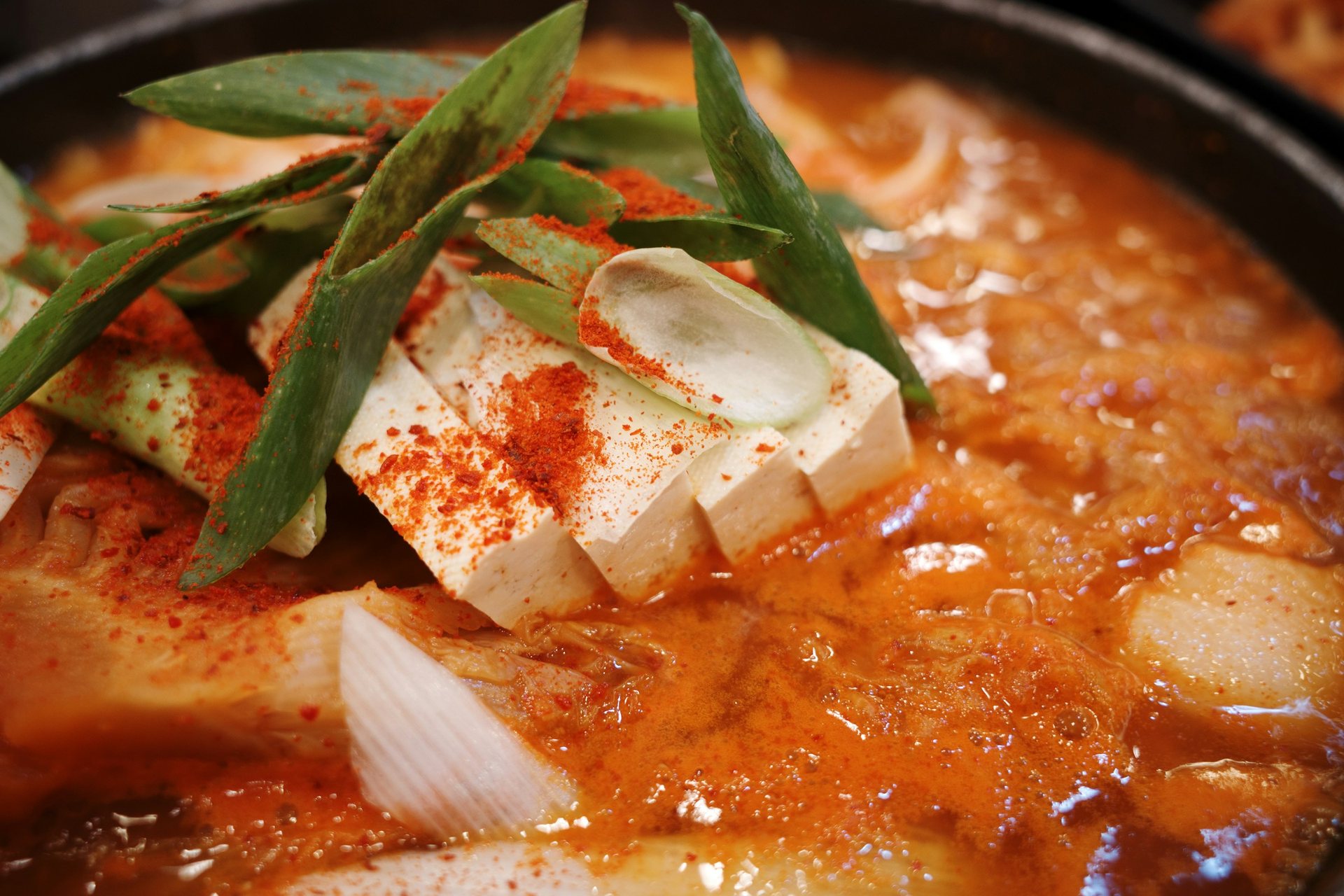
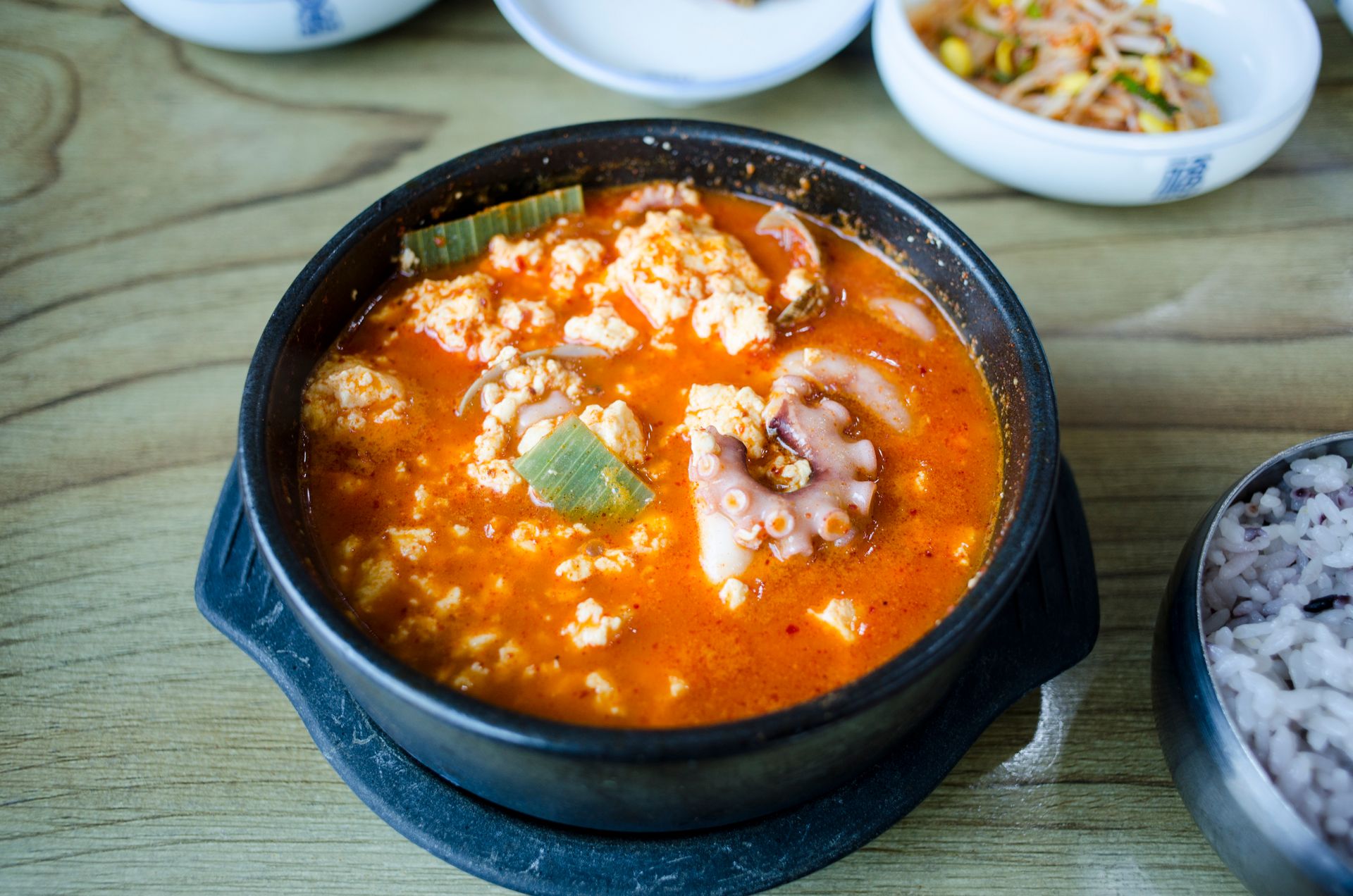
Doenjang-jjigae
Fermented soybean paste simmered in anchovy broth with tofu, zucchini and potato: a savory, earthy stew that turns up on Korean tables week in, week out. About 30 minutes for two.
- Time
- 30 min
- Level
- Easy
- Spice
- Serves
- 2
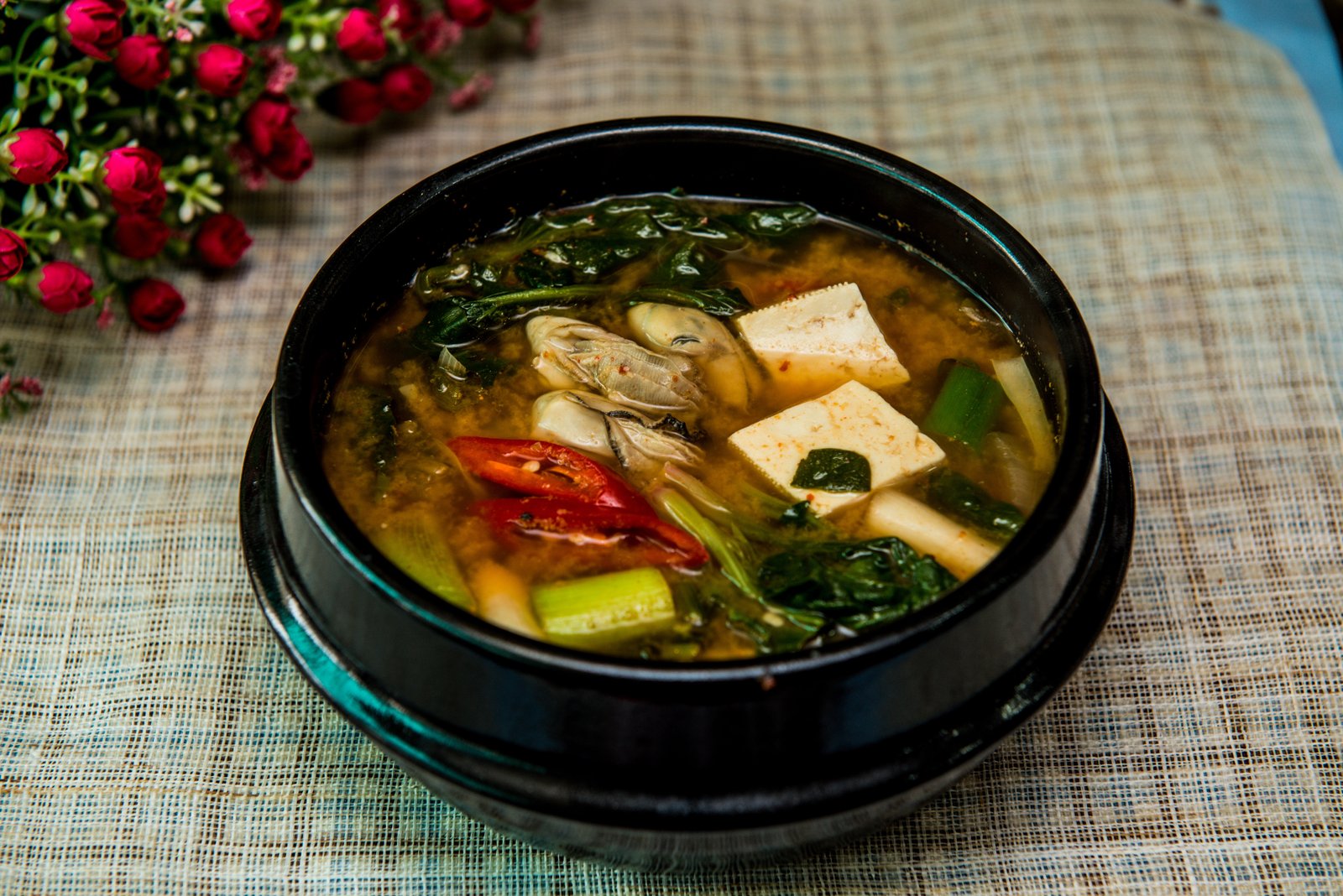
What is Doenjang-jjigae?
WHAT IT IS
Doenjang-jjigae is a stew of doenjang, Korea's fermented soybean paste, simmered in anchovy broth with tofu, zucchini, potato and onion. It's savory and earthy and only mildly spicy, and it's one of the stews Koreans eat most often, from weeknight dinners at home to the end of a barbecue meal.
WHERE IT COMES FROM
It's also called tojang-jjigae. According to the Encyclopedia of Korean Culture, the word jjigae first appears in the late-19th-century cookbook Siuijeonseo, under the name jochi, and no one knows exactly when stews split off from soups. Doenjang itself is far older: the Samguk Sagi lists jang (fermented soy sauce and paste) and meju among the wedding gifts when King Sinmun of Silla took a queen in 683.
Sources:Encyclopedia of Korean Culture (된장찌개)National Institute of Korean Language (한식명 표준 번역)
Ingredients
재료Each Korean item has a substitute, in case you can’t get to a store.
Paid links · The store links in this list are affiliate links: K for All earns a commission when you buy through them. Sales, shipping and refunds are handled by each store.
- 2 tbsp, plus more to tasteDoenjang (Korean fermented soybean paste) 된장
CJ Haechandle Doenjang (Korean Soybean Paste) · 500 g
Substitute: Brands vary a lot in saltiness, so start with 1½ tbsp and add more at the end. Japanese miso is the closest swap, though it tastes sweeter and less pungent.
Check price on Amazon Amazon US - 2½ cups (600 ml)Anchovy broth 멸치 육수
Substitute: Simmer 6–8 dried soup anchovies and a 4-inch (10 cm) piece of kelp in water for 10–15 minutes, then strain. An anchovy broth tablet dissolved following the pack works too, and plain water will do in a pinch.
Search on Amazon Amazon US - ½ block (about 7 oz / 200 g)Medium or firm tofu, cut into ¾-inch cubes 두부Any grocer
- ½ smallKorean zucchini (aehobak), quartered lengthwise and sliced 애호박
Substitute: A regular green zucchini works the same way.
Any grocer - 1 smallPotato, cut into ½-inch pieces 감자Any grocer
- ¼ mediumOnion, cut into ¾-inch pieces 양파Any grocer
- 3 oz (85 g) (optional)Fatty pork or beef, thinly sliced 돼지고기
Substitute: Leave it out for a lighter stew, or add a handful of clams in step 4 instead.
Any grocer - 1Red or green chili, sliced on the diagonal 홍고추
Substitute: A Korean cheongyang chili makes it noticeably hotter; a mild chili just adds color.
Any grocer - 1Scallion, sliced on the diagonal 대파Any grocer
- 1 tspGarlic, minced 다진 마늘Any grocer
- ½–1 tsp (optional)Gochugaru (Korean red pepper flakes) 고춧가루
Taekyung Red Pepper Powder · 1 lb
Substitute: Leave it out for a pot that isn't spicy at all.
Check price on Amazon Amazon US - A little cooking oil if you brown the meatIn your pantry
-


Method
만드는 법Sources we compared:Korean Bapsang10000recipeEncyclopedia of Korean Culture
- 1
Cut the vegetables and tofu
Cut the potato into ½-inch pieces and the onion into ¾-inch squares. Quarter the zucchini lengthwise and slice it ½ inch thick. Cut the tofu into ¾-inch cubes, and slice the chili and scallion on the diagonal. If you're making anchovy broth, get it simmering now.
- 2
Dissolve the doenjang
If you're using meat, brown it in a small pot with a little oil over medium heat for 2 minutes. Pour in the broth and bring it to a boil. Put the doenjang in a small sieve or ladle, lower it into the broth and press it through with a spoon until it dissolves.
Start with 1½ tbsp. You can always add more doenjang at the end, but you can't take it out.
- 3
Cook the potato first
Add the potato and boil over medium-high heat for 4–5 minutes, until the edges start to soften. Firm vegetables go in first; quick-cooking ones wait for the next step.
Sliced radish, shiitake and enoki are all common additions. Add radish with the potato and mushrooms with the zucchini.
- 4
Add the rest and season
Add the onion, zucchini, garlic and chili and boil for 3–4 minutes. Add the tofu and gochugaru and simmer for 2–3 minutes more, until the zucchini is just tender. Taste, stir in a little more doenjang if it needs salt, then add the scallion and turn off the heat.
- 5
Serve it bubbling
Bring the pot to the table while it's still bubbling and serve with rice and kimchi. Spoon some of the stew over your rice, or eat it alongside.
At Korean barbecue restaurants, many people finish the meal with a pot of doenjang-jjigae and a bowl of rice. Order it with the phrases below.
Say it in Korean
한국어로 말해 보세요For a Korean diner, or the end of a barbecue dinner.
Cookware you’ll need
조리 도구Any small pot works for cooking. To bring it to the table still bubbling, restaurant style, here is the 44 fl oz stone pot we link to.