Yukgaejang
Beef brisket simmered until tender, pulled into shreds and cooked again with scallions, bean sprouts and bracken fern in a chili-oil broth: spicy, beefy and filling. About 110 minutes for four.
- Time
- 110 min
- Level
- Medium
- Spice
- Serves
- 4 servings
What is Yukgaejang?
WHAT IT IS
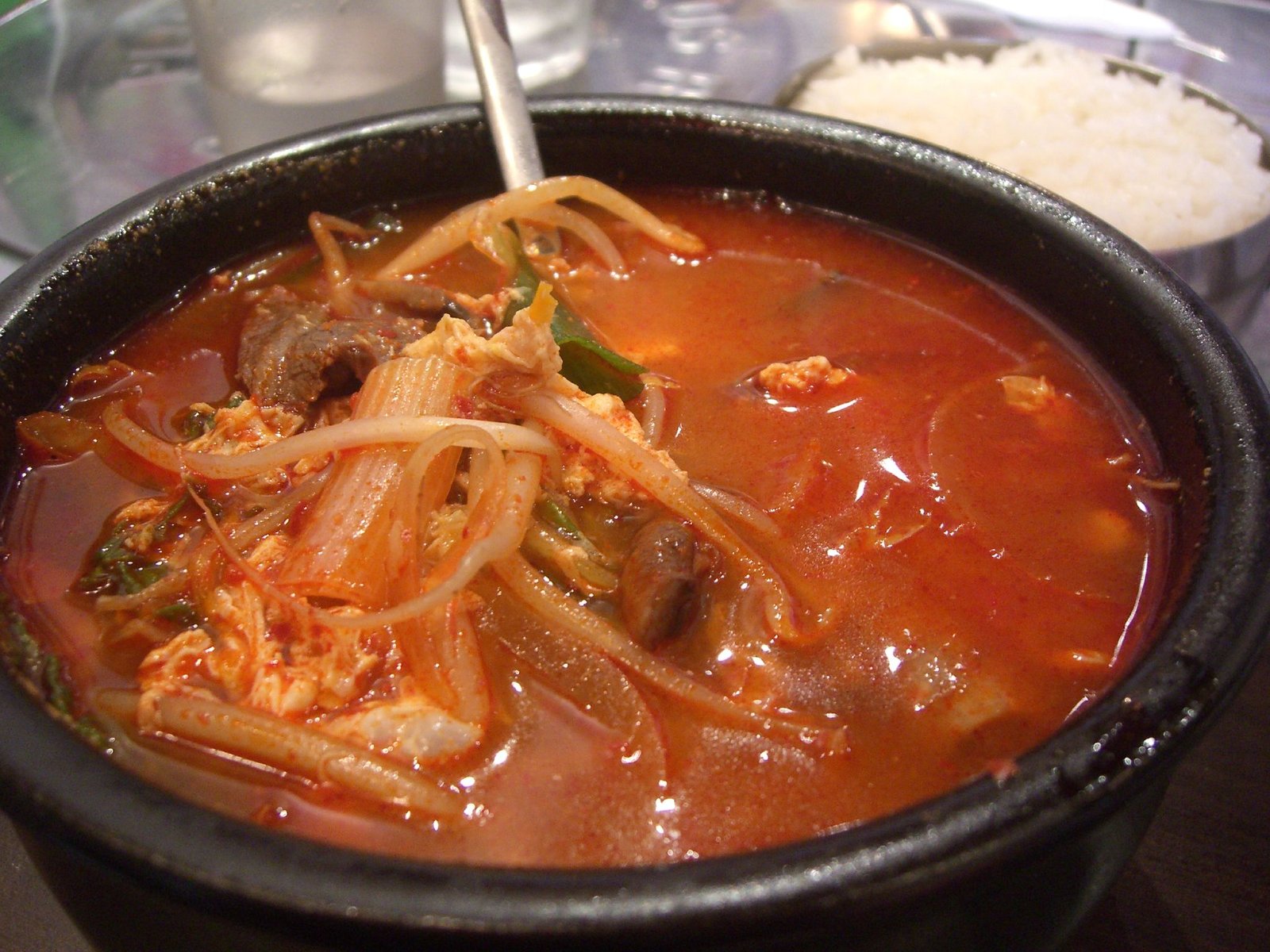
Yukgaejang is a fiery red soup: beef simmered for an hour, pulled into shreds, then cooked again with plenty of scallions, bean sprouts and bracken fern (gosari) in a chili-oil broth. With a bowl of rice it's a hearty meal on its own.
WHERE IT COMES FROM
Yukgaejang is generally traced to gaejang-guk, a dog-meat soup seasoned with scallions and pepper that 18th- and 19th-century books of seasonal customs describe; yuk means meat, here beef, which took the dog meat's place. In 1929 the magazine Byeolgeongon named Daegu as the dish's home. It's still a traditional food for the bok days, the hottest days of summer, on the idea of fighting heat with heat, and Koreans eat it all year round.
Sources:Encyclopedia of Korean Culture: YukgaejangKyunghyang Shinmun (Go Young, food historian)
Ingredients
재료Each Korean item has a substitute, in case you can’t get to a store.
Paid links · The store links in this list are affiliate links: K for All earns a commission when you buy through them. Sales, shipping and refunds are handled by each store.
- 1 lb (450 g)Beef brisket, in one or two pieces 소고기
Substitute: Shank or eye of round works too. Pick a lean cut that pulls apart into long strands.
Any grocer - 3 Korean daepa or 2 bunches scallionsKorean scallions (daepa), cut into 3-inch (7 cm) lengths, thick white parts halved lengthwise 대파
Substitute: Daepa's sweetness is the heart of this soup. If you only have regular scallions, use plenty.
Any grocer - 8 oz (225 g)Mung bean sprouts 숙주Any grocer
- 5 oz (150 g), cookedBracken fern (gosari), soaked and cooked 고사리
Substitute: Korean grocers sell it ready to use in the refrigerated section. Dried gosari (about 1 oz / 30 g) needs an overnight soak, then 20–30 minutes of simmering until tender. Leave it out if you can't find it.
Any grocer - 4 (optional)Shiitake mushrooms, sliced (soak dried ones first) 표고버섯Any grocer
- 2½ tbspGochugaru (Korean chili flakes) 고춧가루
Taekyung Red Pepper Powder · 1 lb
Substitute: For a milder pot use 1½ tbsp; for more heat, up to 4 tbsp.
Check price on Amazon Amazon US - 2 tbspToasted sesame oil 참기름
Otoki Premium Roasted Sesame Oil · 10.82 fl oz
Check price on Amazon Amazon US - 2 tbspKorean soup soy sauce (guk-ganjang) 국간장
Sempio Soy Sauce for Soup (guk-ganjang) · 860 ml
Substitute: Regular soy sauce works: use a little less and finish with salt.
Check price on Amazon Amazon US - 1½ tbspGarlic, minced 다진 마늘Any grocer
- 2 (optional)Eggs, lightly beaten 달걀Any grocer
- 2 oz (60 g), optionalSweet potato glass noodles (dangmyeon), soaked in warm water for 30 minutes 당면
Ottogi Korean Vermicelli Premium Glass Noodles (Dangmyeon) · 500 g
Check price on Amazon Amazon US - 12 cups (3 L)Water 물In your pantry
- ½ onion for the beef broth; salt and black pepper, to tasteIn your pantry
-


Method
만드는 법Sources we compared:Korean Bapsang10000recipeEncyclopedia of Korean Culture
- 1
Simmer the beef
Put the beef, the half onion and 12 cups (3 L) water in a large pot and bring to a boil, skimming off the foam. Turn the heat to medium, cover and simmer for about 1 hour, until a chopstick slides easily into the meat. Lift out the beef to cool, discard the onion and skim the fat off the broth. You should have about 8 cups (2 L) of broth.
If the beef looks bloody, soak it in cold water for 30 minutes first; the broth comes out cleaner.
- 2
Prep the vegetables
While the beef cooks, blanch the bean sprouts in boiling water for 1 minute and drain. Cut the scallions into 3-inch (7 cm) lengths, halving the thick white parts lengthwise. Trim any tough stem ends off the gosari and cut it into 3-inch lengths, and slice the mushrooms.
Many Korean cooks blanch the scallions for 30 seconds along with the sprouts. It takes away their raw bite and keeps the broth from turning slimy.
- 3
Make the chili oil and season the beef
Tear the cooled beef along the grain into thin strips about 3 inches (7 cm) long. In a large pot, warm the sesame oil over low heat, stir in the gochugaru and take the pot off the heat as soon as the oil turns red, after about 30 seconds. Add the shredded beef, gosari, mushrooms, garlic and 1 tbsp soup soy sauce and mix well so everything is coated.
Scorched chili flakes taste bitter. If they darken or smoke, wipe out the pot and start the oil again.
- 4
Simmer everything together
Pour the broth over the seasoned beef, add the remaining 1 tbsp soup soy sauce and bring to a boil. Cover and boil over medium heat for 10 minutes. Add the scallions and bean sprouts and simmer for 10 minutes more, until the scallions are soft and sweet. Season with salt (start with 1 tsp) and pepper.
- 5
Finish with egg and serve
If you're using noodles, add them for the last 3–4 minutes. Drizzle the beaten eggs slowly over the surface, wait 30 seconds for them to set, then stir gently and turn off the heat. Serve piping hot with rice.
Say it in Korean
한국어로 말해 보세요For a Korean restaurant that serves yukgaejang.
Cookware you’ll need
조리 도구Cook it in any large pot (at least 5 quarts / 5 L). To serve it the way Korean restaurants do, still boiling, here's the 44 fl oz stone pot we link to.