Mandu
Thin wrappers folded around a juicy filling of pork, tofu, bean sprouts and garlic chives, then steamed until translucent or pan-fried until crisp on the bottom. Make a big batch: they freeze well and cook straight from the freezer. About 75 minutes for about 40 dumplings, folding included.
- Time
- 75 min
- Level
- Medium
- Spice
- Serves
- About 40 dumplings
What is Mandu?
WHAT IT IS
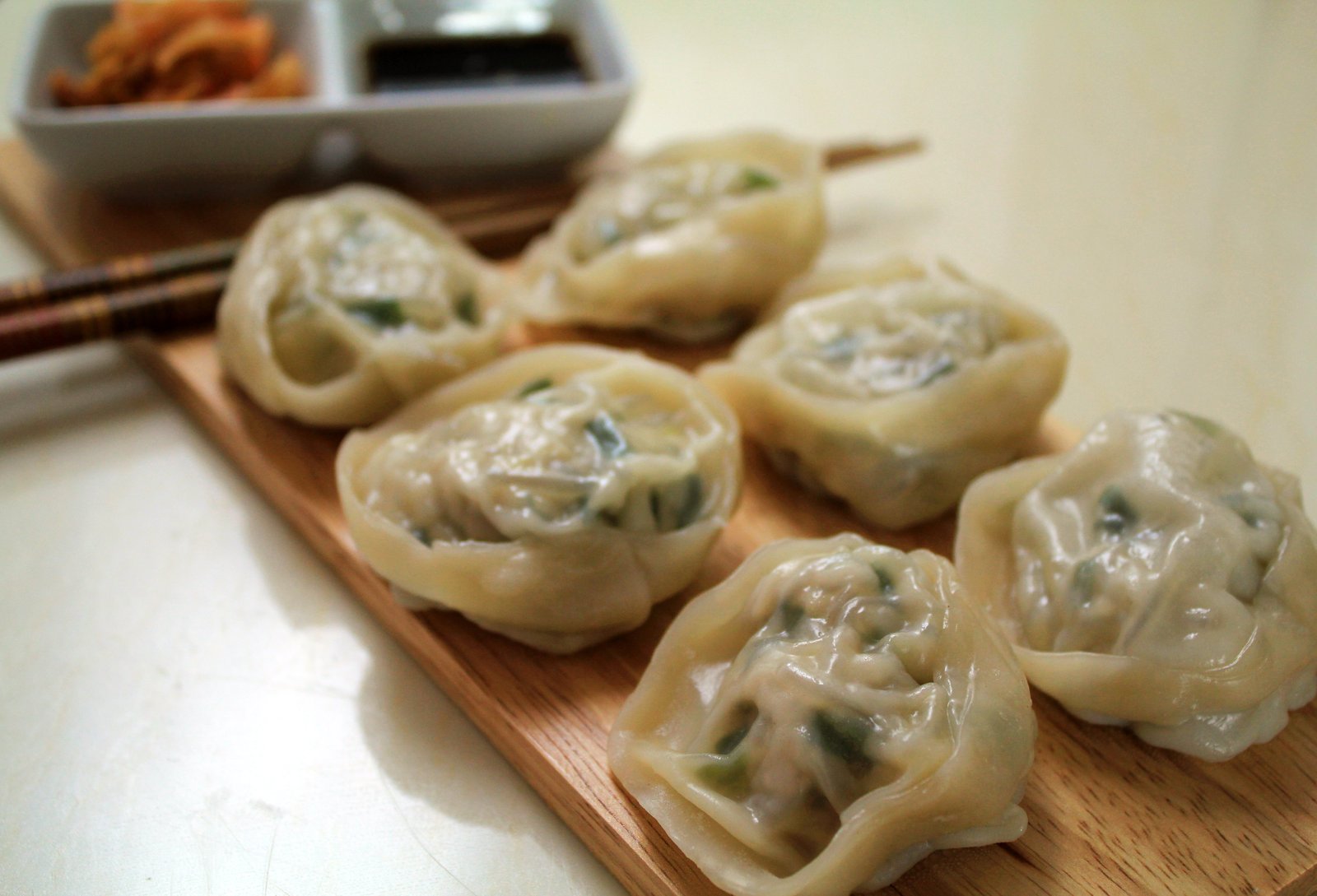
Mandu are Korean dumplings: a thin wheat wrapper folded around a filling of meat, tofu and vegetables, then steamed, boiled, pan-fried or simmered in soup as manduguk. Fillings change from home to home; pork, tofu, bean sprouts and garlic chives make a classic mix, and kimchi mandu is just as common. Families often fold a big batch together and freeze the rest.
WHERE IT COMES FROM
Mandu is thought to have come to Korea from China, though no one knows exactly when. It was clearly known by the Goryeo period: the Goryeosa, the official history of Goryeo, records that under King Chunghye in the 14th century people were punished for stealing mandu from the royal kitchen, and the Goryeo song Ssanghwajeom takes its name from a dumpling shop. Mandu went on to become a dish for feasts and ancestral rites and a winter favorite, developing most of all in the northern provinces, where wheat and buckwheat grew well.
Sources:Encyclopedia of Korean Culture: ManduEncyclopedia of Korean Culture: Ssanghwajeom
Ingredients
재료Each Korean item has a substitute, in case you can’t get to a store.
Paid links · The store links in this list are affiliate links: K for All earns a commission when you buy through them. Sales, shipping and refunds are handled by each store.
- About 40Round dumpling wrappers (mandu-pi), about 3½ inches (9 cm) across 만두피
Substitute: Look in the refrigerated or freezer section of a Korean or Asian grocer. Thaw frozen wrappers in the fridge so they don't crack. Thin gyoza wrappers work too.
Any grocer - 8 oz (225 g)Ground pork 돼지고기
Substitute: Half pork and half ground beef is common in Korea too. A little fat keeps the filling juicy.
Any grocer - ½ block (7 oz / 200 g)Firm tofu 두부Any grocer
- 7 oz (200 g)Mung bean sprouts 숙주
Substitute: No sprouts? Use the same weight of finely chopped green cabbage: salt it for 15 minutes, then squeeze it dry.
Any grocer - 1½ oz (40 g), optionalSweet potato glass noodles (dangmyeon) 당면
Ottogi Korean Vermicelli Premium Glass Noodles (Dangmyeon) · 500 g
Substitute: They soak up the juices so the filling doesn't turn watery. Leave them out for a meatier filling.
Check price on Amazon Amazon US - 3 oz (80 g)Garlic chives (buchu) 부추
Substitute: Or 3–4 scallions, finely chopped.
Any grocer - 1 tbsp garlic, 1 tsp gingerGarlic, minced, and fresh ginger, grated 마늘·생강Any grocer
- 1Egg 달걀Any grocer
- 1 tbsp, plus 2 tbsp for the dipping sauceSoy sauce 간장
Sempio Korean Soy Sauce, Rich and Delicate · 860 ml
Check price on Amazon Amazon US - 1 tbspToasted sesame oil 참기름
Otoki Premium Roasted Sesame Oil · 10.82 fl oz
Check price on Amazon Amazon US - ½ tsp salt and ¼ tsp black pepper for the filling, plus salt for blanching; for the dipping sauce, 1 tbsp vinegar, 1 tbsp water and a pinch of gochugaru (optional); a little flour for the trayIn your pantry


Method
만드는 법Sources we compared:Korean BapsangKorean Bapsang (kimchi mandu)10000recipe
- 1
Prep the sprouts, noodles and tofu
Blanch the bean sprouts in salted boiling water for 1 minute, rinse them in cold water, squeeze out as much water as you can and chop them finely. Soak the glass noodles in warm water for 30 minutes (or boil them for 3 minutes), drain and chop them into short bits. Wrap the tofu in a clean kitchen towel or cheesecloth, wring out the water and crumble it into a large bowl. Finely chop the garlic chives.
Squeeze hard. Water left in the sprouts and tofu makes the filling soggy and the wrappers tear.
- 2
Mix the filling
Add the pork, sprouts, noodles, garlic, ginger, egg, 1 tbsp soy sauce, the sesame oil, ½ tsp salt and ¼ tsp pepper to the tofu and mix by hand for a minute or two, until it holds together. Fold in the chives last, gently. To check the seasoning, cook a teaspoon of filling in a small pan (or microwave it for 20–30 seconds), taste, and add salt if needed.
- 3
Fold the dumplings
Hold a wrapper in your palm and put a heaping teaspoon to a tablespoon of filling in the center. Wet the edge with water, fold it into a half-moon and press the edges together from one end to the other, pushing out the air as you go. For a round dumpling like the ones in the photo, bring the two corners together, dab one with water and pinch them. Set the dumplings on a lightly floured tray, not touching, and keep them covered with a towel.
New to folding? Use less filling. A dumpling that seals tight beats a plump one that bursts.
- 4
Steam or pan-fry
To steam: line a steamer basket with damp cheesecloth or cabbage leaves, set the dumplings in with a little space between them and steam over boiling water for 10–12 minutes, until the wrappers turn translucent and the filling is firm. To pan-fry (gun-mandu): heat 2 tbsp oil in a nonstick pan over medium-high heat and brown the flat sides for about 2 minutes. Add ⅓ cup (80 ml) water, cover at once, turn the heat to medium-low and cook for 5 minutes, then uncover and let the bottoms crisp up again.
To boil them (mul-mandu), drop a few at a time into boiling water and cook 1–2 minutes after they float. However you cook them, cut one open to check: the pork should show no pink.
- 5
Serve, and freeze the rest
Stir together 2 tbsp soy sauce, 1 tbsp vinegar, 1 tbsp water and a pinch of gochugaru, and serve the mandu hot with this dipping sauce. To freeze uncooked dumplings, spread them on a tray so they don't touch, freeze for about an hour until hard, then pack them into freezer bags. Cook them straight from frozen, adding 2–3 minutes.
For kimchi mandu, swap the bean sprouts for 1 cup (about 5 oz / 150 g) of finely chopped, well-squeezed kimchi and add 1 tbsp gochugaru to the filling.
Say it in Korean
한국어로 말해 보세요For a mandu shop or a bunsik snack bar.

Cookware you’ll need
조리 도구A bamboo or metal steamer basket is all you need for steaming. For pan-fried mandu, this is the 12-inch nonstick pan we link to (for gas and electric stoves, not induction); any lid that fits will do.