
 음식
Buy for one recipe first
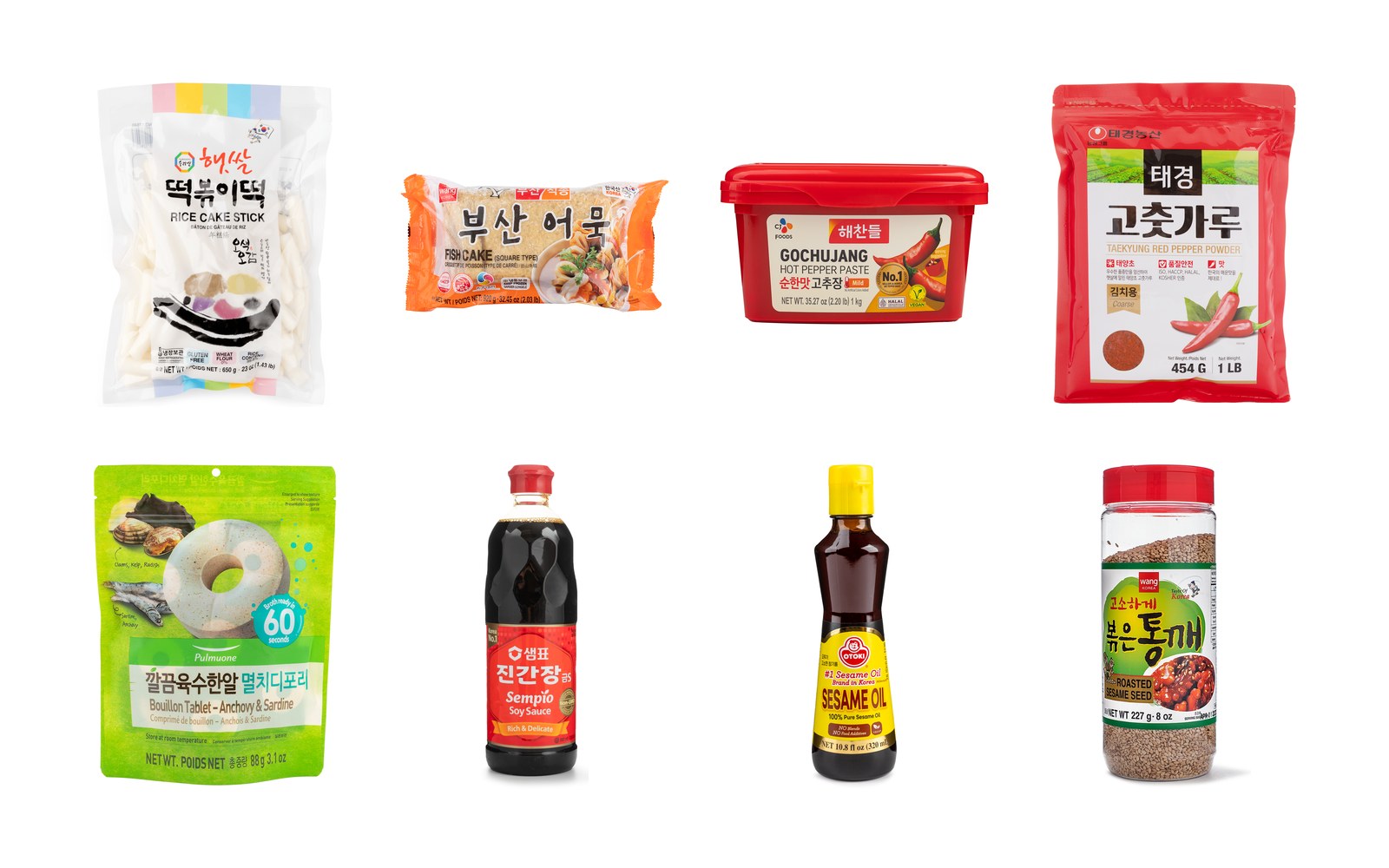
The easiest way to build a Korean pantry is to shop for one dish you want to cook, then add to it. Tteokbokki needs gochujang, gochugaru, anchovy stock, rice cakes and fish cake. Sundubu-jjigae uses the same gochugaru and stock plus sesame oil, soft tofu and kimchi. Gimbap needs gim, rice, sesame oil, fish cake and pickled radish. Bibimbap needs little more than cooked rice, gochujang and sesame seeds, and the yangnyeom chicken glaze adds corn syrup to the gochujang.
After two or three recipes, the same bottles keep coming back: gochujang, gochugaru, soy sauce, sesame oil and stock. Our pantry starter kit puts eight of these staples on one list with their store links, and each recipe page lists its ingredients with store links too.
Our picks at a glance
Paid links · Store and booking links in this guide are affiliate links: when you buy or book through them, K for All earns a commission at no extra cost to you. Prices and availability change, so check the store before you buy. How we pick: we compare official information, specs, prices and published reviews; we haven't personally tested every product.
-
1Best for tteokbokki, bibimbap and chicken glazes
CJ Haechandle Gochujang (500 g)
A 17.63 oz (500 g) tub of Haechandle gochujang, CJ's fermented red chili paste. The Amazon listing calls it sweet, savory and spicy, and its ingredients start with wheat flour, corn syrup, water and hot pepper powder. It's the gochujang in our Tteokbokki, Bibimbap and Yangnyeom Chicken recipes.
-
2Best for kimchi, stews and sundubu-jjigae
Taekyung Gochugaru, Coarse (1 lb)
Coarse red pepper flakes in a 1 lb (454 g) zipper bag, labeled for kimchi and marked medium-hot on Taekyung's heat scale. The only ingredient is red pepper: the bag lists China as the origin and says it was packed in Korea. Taekyung says to seal the bag and refrigerate it after opening for the best flavor.
-
3Best for dipping sauces, braises and stir-fries
Sempio Jin Gold soy sauce (860 ml)
The Amazon link is Sempio's Jin Gold F3, an 860 ml bottle of jin-ganjang (Korean brewed soy sauce). This is the soy sauce for the Pajeon dipping sauce, the Gimbap fish cake and the Yangnyeom Chicken glaze on K for All.
-
4Best for finishing bibimbap, gimbap and stews
Otoki Premium Roasted Sesame Oil (320 ml)
The label lists one ingredient, sesame seed. The Amazon listing calls it a finishing oil that isn't meant for high heat, so add it at the end or to marinades, dressings and dipping sauces. Otoki says to keep it at room temperature. Our Gimbap and Sundubu recipes both use it.
-
5Best for gimbap and everyday rice
Nishiki Medium Grain Rice (5 lb)
A 5 lb bag of U.S.-grown medium-grain rice, and the rice our Gimbap recipe uses. The Amazon listing says to keep it in an airtight container in a cool, dry place. Short on time? Our Bibimbap recipe also works with microwavable cooked rice bowls.
Start with the three jang
Korean cooking leans on jang, fermented sauces such as soybean paste, soy sauce and red chili paste. In 2024 UNESCO added Korea's jang-making to its Representative List of the Intangible Cultural Heritage of Humanity, noting that jang goes with vegetables, fish and meat and that the know-how is passed down mainly within families.
Doenjang (soybean paste) and ganjang (soy sauce) come from the same batch. Soybeans are made into meju, fermented and dried soybean lumps, which go into brine with salt and water; later the meju is ground into doenjang and the remaining liquid becomes soy sauce. Gochujang, the spicy red pepper paste, goes into bibimbap, and on K for All it also flavors tteokbokki and the yangnyeom chicken glaze.
Soy sauce: jin-ganjang or soup soy sauce
Korean brands sell more than one kind of soy sauce, and the label tells you which job each one is for. Sempio sells its Jin Gold S and Jin Gold F3 jin-ganjang for braised and stir-fried dishes, and that's the bottle in our picks.
Guk-ganjang, or soup soy sauce, is a separate bottle. Sempio describes its Soy Sauce for Soup as adding depth of flavor to soups and stews with a light, savory taste. If a recipe asks for soup soy sauce, buy the bottle labeled for soup instead of swapping in jin-ganjang.
Gochugaru, sesame oil and sesame seeds
Gochugaru comes in different grinds. Crazy Korean Cooking, for example, sells a fine grind for making sauces and a coarse grind for kimchi. The Taekyung bag in our picks is the coarse kind, and our Sundubu recipe uses 1–3 teaspoons of it per batch.
The Otoki sesame oil is a finishing oil: its listing says it isn't for high heat and is best added after cooking or to marinades, dressings and dipping sauces. Roasted sesame seeds do the same finishing job on bibimbap, and Ottogi's roasted sesame seeds are part of our pantry starter kit.
Quick stock, gim and rice cakes
Anchovy broth is the base of our Sundubu and Tteokbokki recipes. Bouillon tablets are the shortcut, and the Sundubu recipe also gives a from-scratch broth of dried anchovies, kelp and radish if you want the longer route.
Gim, roasted seaweed, holds gimbap together. Sajo gimbap sheets come 10 full sheets to a 20 g pack, and the label says to store them in a cool place away from sunlight and moisture and to eat them soon after opening.
Tteokbokki rice cakes are perishable. The Surasang pack is made from rice, water, salt and ethanol and is marked keep refrigerated. The label explains that it's treated with ethanol for safety, so a faint alcohol smell when you open it doesn't mean it has spoiled. Once it's open, the label says to cook it right away or seal it in the fridge. The Tteokbokki recipe lists where to buy rice cakes.
How the makers say to store them
Storage advice differs from product to product, so follow the label on the one you buy. Here is what the makers of the products above say.
- Gochujang (CJ): cool place away from sunlight; refrigerate after opening. It may darken as it ripens.
- Gochugaru (Taekyung): seal the zipper bag and refrigerate after opening for the best flavor.
- Sesame oil (Otoki): keep at room temperature.
- Bouillon tablets (Pulmuone): store at room temperature.
- Gim (Sajo): keep in a cool place away from sunlight and moisture, and eat soon after opening.
FAQ
Does gochujang need to be refrigerated?
Once it's open, yes. CJ's label says to keep the tub in a cool place away from sunlight and in the fridge after opening. It can turn darker as it keeps ripening, which the label says is nothing to worry about.
What's the difference between guk-ganjang and regular soy sauce?
Guk-ganjang is soup soy sauce, sold as its own bottle. Sempio describes its Soy Sauce for Soup as giving soups and stews depth with a light, savory taste, and recommends its Jin Gold jin-ganjang for braised and stir-fried dishes. Use the one your recipe names.
Is gochujang gluten-free?
Not the one in our picks. The Amazon listing for the CJ Haechandle tub lists wheat flour and wheat among its ingredients and says it contains wheat and soybean, so read the label carefully if you avoid gluten.
Should sesame oil go in the fridge?
Otoki, the maker of the oil in our picks, says to keep it at room temperature. Use it to finish dishes: its Amazon listing says it isn't meant for high heat.
Should I buy coarse or fine gochugaru?
Coarse flakes are the everyday choice: Taekyung's listing says its coarse gochugaru is for kimchi and Korean dishes such as spicy stir-fried pork. Fine powder is for smooth sauces; Crazy Korean Cooking, for example, sells its fine grind for sauce making.
Read next on K for All
Korean pantry starter kitTteokbokki recipeBibimbap recipeAll Korean recipes
Sources (10)
UNESCO – Jang-making in the Republic of KoreaKorea.net – Sauce master explains UNESCO-recognized fermented paste (2024)Sempio – Soy Sauce Jin Gold SSempio – Soy Sauce for SoupOtoki – Premium Sesame OilWeee! – CJ Gochujang, Mild (label)Weee! – Taekyung Red Pepper Powder (label)Weee! – Sajo Roasted Laver for Gimbap (label)Weee! – Surasang Rice Cake Stick (label)Crazy Korean Cooking – Fine-grind gochugaru for sauce making