
 음식
Soup, stir-fried or cold: pick a style first
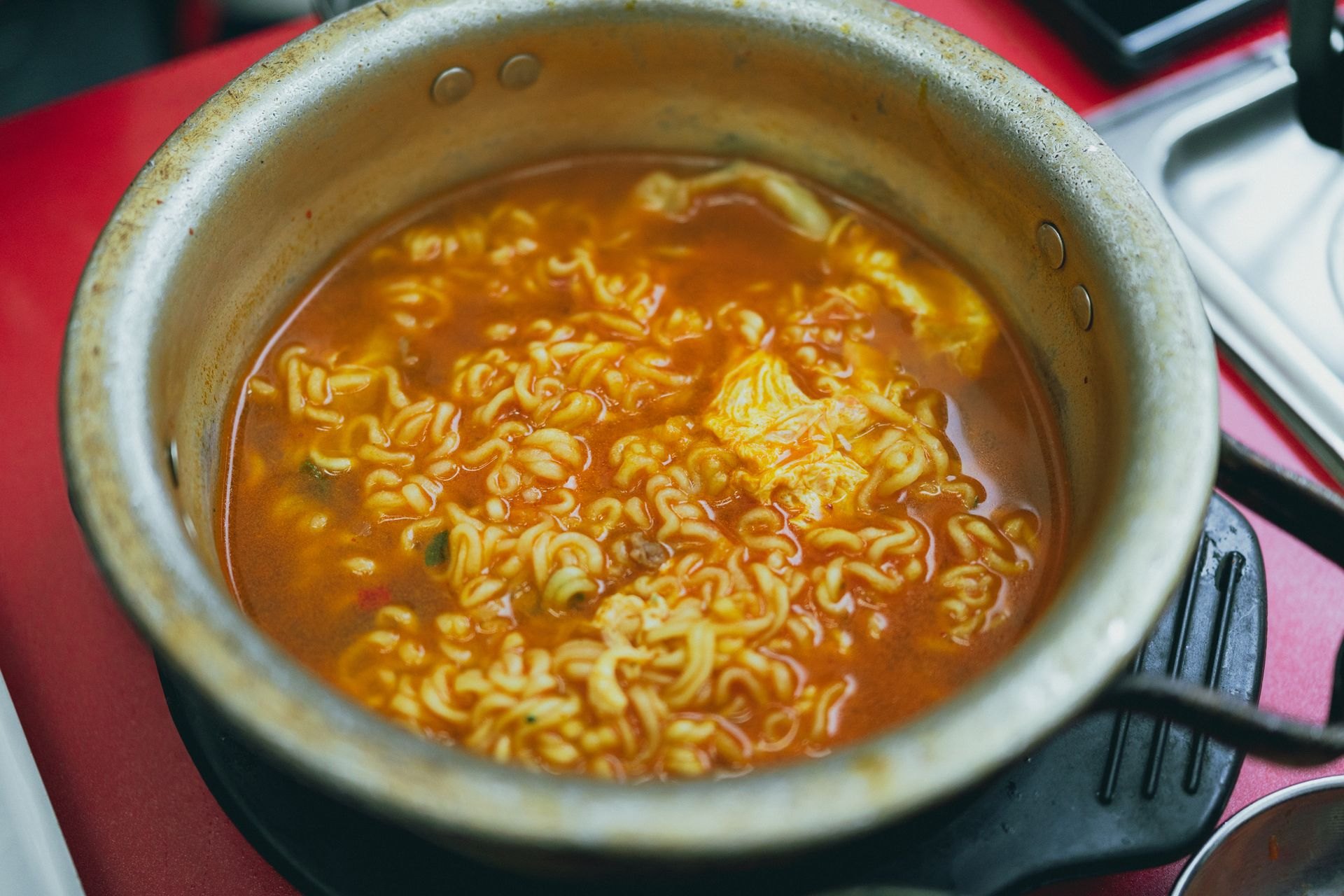
Korean instant noodles, or ramyeon, come in three main styles, and knowing which one you want narrows the shelf fast. Soup ramyeon is eaten with its broth. Shin Ramyun, Neoguri, Jin Ramen and Soon Veggie are all this kind, and they're the ones to reach for on a cold night or when you want to crack an egg into the pot.
Stir-fried noodles such as Buldak and Chapagetti are boiled, then most of the water is poured off so the sauce clings to the noodles. Bibim Men is the cold one: Paldo's original method rinses the cooked noodles in cold water before you mix in the sauce, and Paldo also gives a warm version without the rinse. Cup noodles are the simplest of all: Nongshim sells Soon Veggie in a microwavable cup.
Most of these are sold in multipacks, so the links above go to family packs or boxes. Check the pack count on the store page before you order.
Our picks at a glance
Paid links · Store and booking links in this guide are affiliate links: when you buy or book through them, K for All earns a commission at no extra cost to you. Prices and availability change, so check the store before you buy. How we pick: we compare official information, specs, prices and published reviews; we haven't personally tested every product.
-
1Best for a classic spicy bowl and our Ramyeon recipe
Nongshim Shin Ramyun (4.23 oz bags, pack of 20)
Nongshim describes springy noodles in a spicy beef broth made with beef bone extract, mushrooms and mixed vegetables. Its Amazon listing suggests adding two-thirds of the soup base or less if you want less heat. It contains wheat and soy, and it's the noodle in the ingredient bundle on our Ramyeon recipe.
-
2Best for heat seekers who like stir-fried noodles
Samyang Buldak Hot Chicken Ramen, Original (5 bags)
Buldak is a stir-fried ramen in 140 g bags: you boil the noodles for 5 minutes, keep about half a cup of the water, then stir-fry them with the sauce for 30 seconds. Buldak's own flavor chart rates the Original as High heat, one step below 2X Spicy. Samyang lists wheat, soy and sesame as allergens.
-
3Best for trying Buldak with less fire
Samyang Buldak Carbonara (5 bags)
Buldak's flavor chart puts Carbonara at Low to Medium heat, well below the Original. It cooks the same way, with a packet of cheese powder added along with the sauce, and each bag is 130 g. Samyang lists wheat, soy and milk as allergens.
-
4Best for jjajangmyeon at home and jjapaguri
Nongshim Chapagetti (10 bags)
Nongshim's take on jajangmyeon: noodles in a black bean sauce, with one 127 g bag per serving. It's half of the jjapaguri in our Jjapaguri recipe. The bag contains wheat, soy, shrimp and sesame.
-
5Best for thick, chewy noodles in a seafood broth
Nongshim Neoguri Spicy Seafood (4.2 oz, pack of 10)
Neoguri debuted in 1982 and pairs thick, udon-style noodles with a spicy seafood broth. Nongshim also sells a Mild version. It contains wheat, soy and fish (anchovy, bonito, tuna), and our Jjapaguri recipe uses half of its soup base.
-
6Best for beginners and anyone who wants less spice
Ottogi Jin Ramen Mild (4.23 oz, pack of 18)
Ottogi says the broth is simmered for 13 hours with New Zealand beef bones, and its listing describes a balanced savory taste with gentle spice. A 120 g bag cooks in 4 minutes in about 500 ml of water, and Ottogi also gives a microwave method. It's the milder swap suggested in our Ramyeon recipe.
-
7Best for hot days: chilled noodles, no broth
Paldo Bibim Men cold noodles (5 bags)
Paldo describes it as noodles with a spicy and sweet seasoning. Boil the noodles in 600 ml of water for 3 minutes, rinse them in cold water, then mix in the sauce; Paldo also gives a warm version without the rinse. Paldo lists sesame, soy, wheat and mustard as allergens.
-
8Best vegan pick
Nongshim Soon Veggie Cup (2.64 oz, pack of 6)
Nongshim calls Soon Veggie a vegan noodle, with a vegetable-based broth in a microwavable cup. Each 75 g cup contains wheat and soy. It's made in a facility that also processes fish, shellfish, peanuts, tree nuts, eggs, milk and sesame.
How hot is each one?
Brands don't share one heat scale, and we couldn't find Scoville figures on the makers' official pages for these picks, so we only repeat what each maker says. Samyang's Buldak flavor chart rates the Original as High heat, 2X Spicy as Very High and Carbonara as Low to Medium. The same chart lists milder Buldak flavors outside our picks too, such as Cheese at Medium and Swicy at Low. Nongshim describes Shin Ramyun's flavor as bold and spicy and sells Neoguri in Spicy and Mild versions. Ottogi's listing calls Jin Ramen Mild a balanced savory taste with gentle spice, and Paldo describes the Bibim Men sauce as spicy and sweet.
You can also turn the heat down yourself. Nongshim's Amazon listing for Shin Ramyun suggests adding two-thirds of the soup base or less, and Buldak Carbonara is the gentlest way into the Buldak range.
Cook it the way the maker says
Water and timing change from brand to brand, so follow the directions printed on your pack. The main thing to notice is which noodles keep their cooking water and which don't: soup ramyeon keeps it, while Buldak, Chapagetti and Bibim Men drain most or all of it. Jin Ramen also has its own order of steps: the veggie mix goes into the water first, and the noodles and soup base follow once it boils.
No stove? Ottogi gives a microwave method for Jin Ramen bags, and Nongshim's Soon Veggie comes in a microwavable cup. Here is what the makers publish for a few of our picks.
- Buldak Original: boil 2½ cups (20 oz) of water, cook the noodles 5 minutes, keep ½ cup of the water, add the sauce and stir-fry 30 seconds, then add the flakes.
- Buldak Carbonara: same water and time; keep ½ cup of the water, add the sauce and the cheese powder, stir and serve.
- Jin Ramen Mild: add the veggie mix to about 500 ml (2 cups) of water, bring it to a boil, add the soup base and noodles and cook 4 minutes.
- Bibim Men: boil the noodles in 600 ml of water for 3 minutes, drain, rinse in cold water, then mix in the sauce.
- Chapaguri, Nongshim's recipe: boil Chapagetti and Neoguri together for about 4½ minutes, pour off all but ½ cup of water, add all the Chapagetti soup base and oil plus half the Neoguri soup base, and stir 30 seconds.
From the pack to K for All recipes
Our Ramyeon recipe starts with one 120 g package and 2½ cups (about 600 ml) of water. It poaches an egg in the broth, finishes with green onions, serves kimchi on the side and adds rice to the last of the soup. Shin Ramyun is the noodle in its ingredient bundle, and Jin Ramen Mild is the swap if you want less spice. The light ramyeon pot it links to is in our Korean cooking tools guide.
Our Jjapaguri recipe is the 'ram-don' from Parasite: Chapagetti and Neoguri cooked together and topped with seared sirloin, using Nongshim's half-packet Neoguri ratio. Leave out the steak for the everyday version.
Heading to Seoul? Our Yeouido Hangang Park guide covers the riverside ramyeon picnic, where you buy a packet at a park convenience store and cook it on a self-serve ramyeon machine.
Allergens and diets at a glance
Every pick here contains wheat, so none of them is gluten-free. Labels change, so read the pack you buy; these are the makers' statements as of October 2026. Ottogi's product page doesn't list allergens for Jin Ramen, so check that pack directly.
Cross-contact matters too. Nongshim says Shin Ramyun is made in a facility that also processes milk, eggs, fish, shellfish, tree nuts, peanuts and sesame. Chapagetti's facility also handles fish, eggs, tree nuts, peanuts and milk, and Neoguri's handles peanuts, eggs, tree nuts, sesame, milk and shellfish.
- Shin Ramyun: contains wheat and soy. The broth uses beef bone extract, beef extract and beef fat, so it isn't vegetarian.
- Chapagetti: wheat, soy, shrimp and sesame. Neoguri Spicy: wheat, soy and fish (anchovy, bonito, tuna).
- Buldak Original: wheat, soy and sesame. Buldak Carbonara: wheat, soy and milk.
- Bibim Men: sesame, soy, wheat and mustard.
- Soon Veggie Cup: Nongshim calls it vegan. It contains wheat and soy and is made in a facility that also processes fish, shellfish, peanuts, tree nuts, eggs, milk and sesame.
FAQ
What is the spiciest Korean ramen?
Among our picks, Buldak Original is the hottest by its maker's own chart, which rates it High. Samyang rates Buldak 2X Spicy, which isn't in our picks, as Very High. We couldn't find Scoville numbers on the makers' official pages, so we don't quote any.
Is Shin Ramyun vegetarian?
No. Nongshim's ingredient list for Shin Ramyun Original includes beef bone extract, beef extract and beef fat. For a vegan bowl, Nongshim sells Soon Veggie, which it describes as vegan, and it also lists a Shin Ramyun Vegan Cup.
How can I make Korean ramen less spicy?
Pick a milder product or use less seasoning. Samyang's chart rates Buldak Carbonara Low to Medium, against High for the Original. Nongshim's listing for Shin Ramyun suggests adding two-thirds of the soup base or less. Ottogi's Jin Ramen Mild and Nongshim's Neoguri Mild are the milder versions of their spicy siblings.
Can I cook Korean ramen in the microwave?
Some, yes. Ottogi's method for Jin Ramen: put the soup base and veggie mix in a microwave-safe bowl, add the noodles and about 480 ml (2 cups) of room-temperature water, then microwave on high for 8 minutes at 1000 W, or 5 minutes with hot water. Nongshim's Soon Veggie comes in a microwavable cup. Follow each pack's own directions.
What is jjapaguri?
It's Chapagetti and Neoguri cooked in one pot, the dish from Parasite. Nongshim's own recipe boils both for about 4½ minutes, keeps ½ cup of the water, and uses all of the Chapagetti soup base and oil with half of the Neoguri soup base. Our Jjapaguri recipe adds seared sirloin.
Read next on K for All
Ramyeon recipe, the One Fine Spring Day wayJjapaguri recipe from ParasiteKorean cooking tools, including the ramyeon potYeouido Hangang Park and the ramyeon picnic
Sources (10)
Nongshim USA – Shin Ramyun OriginalNongshim USA – ChapagettiNongshim USA – Neoguri SpicyNongshim USA – Soon Veggie CupNongshim – Chapaguri recipeSamyang America – Buldak OriginalSamyang America – Buldak CarbonaraBuldak.com (Samyang) – Buldak Ramen Flavors ExplainedOtoki – Jin Ramen MildPaldo – Bibimmen