
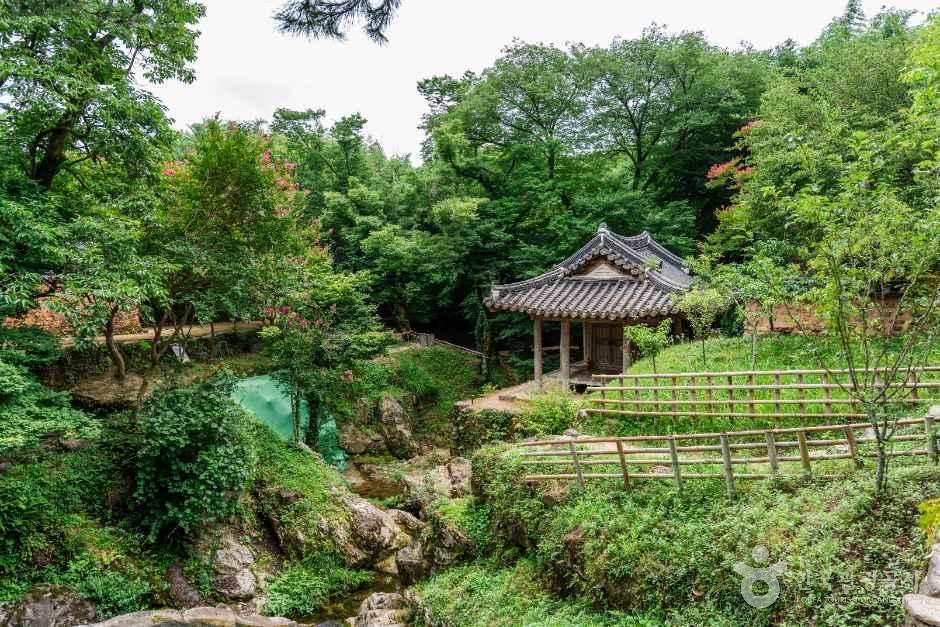
 담양 소쇄원
At a glance
Good to know now
Parking is available, and credit cards are accepted. Information: 061-381-0115.
Hours
Mar–Apr and Sep–Oct 09:00–18:00; May–Aug 09:00–19:00; Nov–Feb 09:00–17:00.
Closed
Open all year.
Booking
GetYourGuide sells an 8-hour private tour from Jeonju that visits Seonamsa Temple, Soswaewon, Juknokwon and Gwanbangjerim, with admission included.
Soswaewon is a designated Scenic Site that keeps the original form of a Korean private garden. It was begun in the 1530s by the scholar Yang San-bo, a student of Jo Gwang-jo, and finished by his son and grandson. A stream from the hill to the north slips under the long eastern wall and runs through the middle of the garden, past the three surviving buildings, Daebongdae, Gwangpunggak and Jewoldang. Look for the flat boulder, the small waterfall, two ponds fed by a hollowed-out log, the sunny Aeyangdan wall and the single-log bridge across the stream. The buildings burned during the Japanese invasion of 1597 and were rebuilt by the family, whose descendants have now cared for the garden for 15 generations.
Book ahead
Paid links · These are affiliate links: when you book through them, K for All earns a commission at no extra cost to you. Booking, payment, cancellations and refunds are handled by the booking site — check its final terms before you pay.
Places to stay nearby
Paid links · Expedia links are affiliate links: when you book through them, K for All earns a commission at no extra cost to you. Distances are rough straight-line figures. Pick your dates on Expedia for live prices, and check each property's cancellation policy before you book.
Map
Numbers match the list. Map data © OpenStreetMap contributors.
Tips
- Take it slowly: the garden is small, about 4,600 m², and the pleasure is in the details, from the log-fed ponds to the stream running under the wall.
- In early autumn, look for red spider lilies among the garden plants, which also include bamboo, plum, pine and camellia.
Nearby
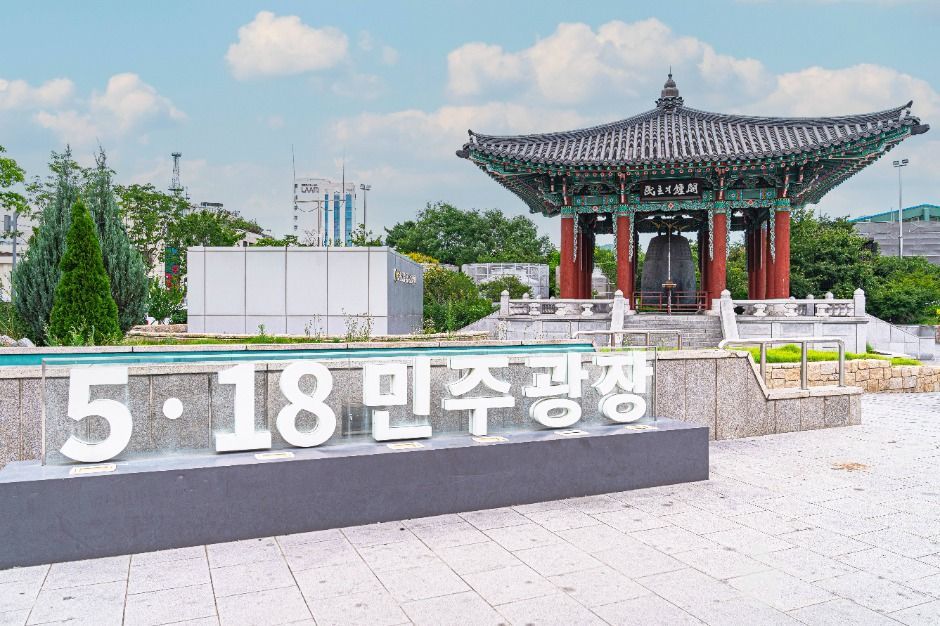 5·18 Democracy SquareThe fountain square in front of the old South Jeolla Provincial Office, the heart of Gwangju's May 1980 democratic uprising.
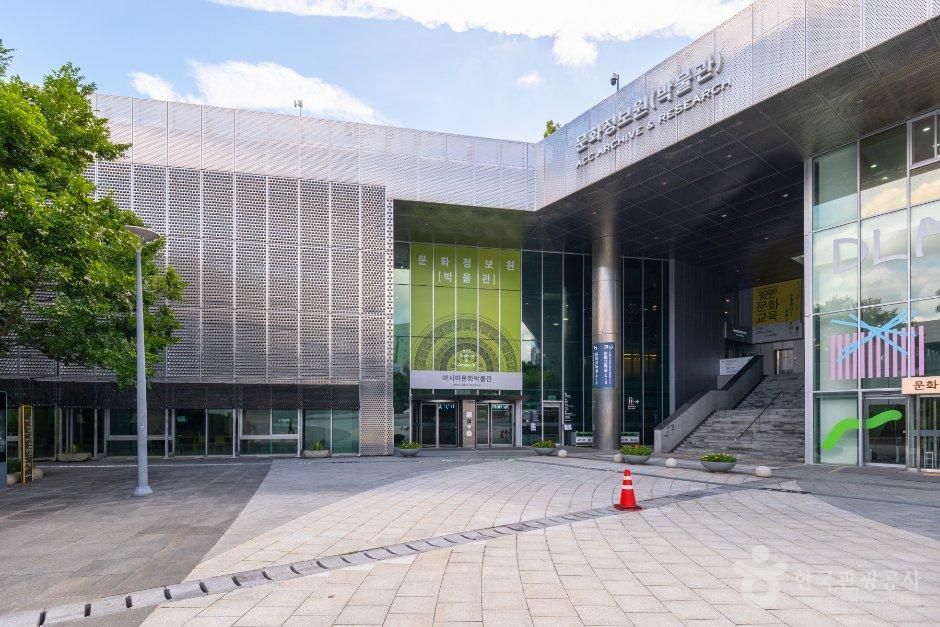 Asia Culture CenterGwangju's national center for Asian arts, opened in 2015 beside the site of the 1980 uprising, with exhibitions, performances and open plazas.Muwol VillageA quiet farming village in Damyang with stone-wall lanes, a pine-wood trail, hanok stays and hands-on country experiences.
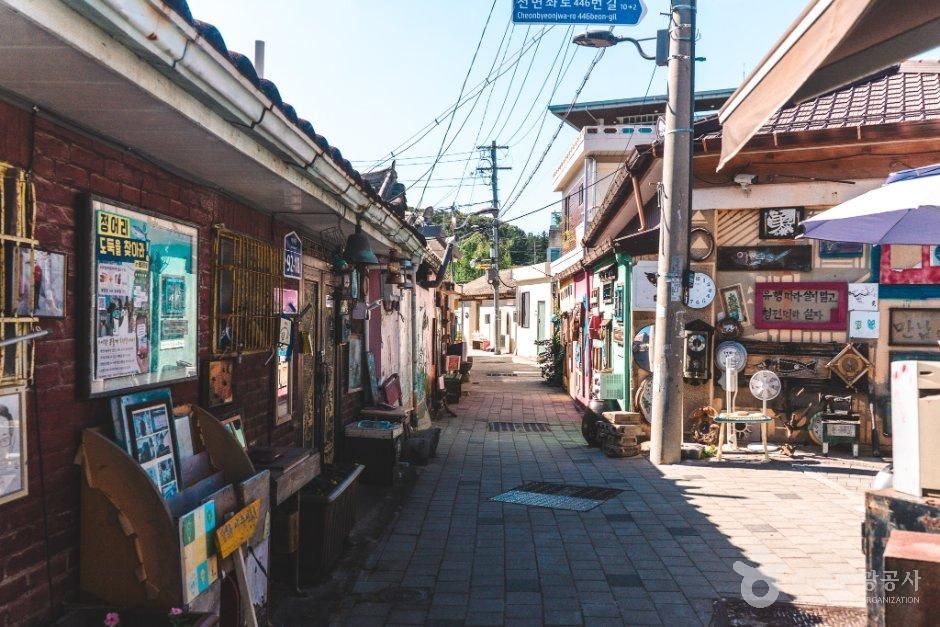 Yangnim-dong Penguin VillageA Gwangju lane village where residents hung old clocks, pots and frames on the walls, now home to craft studios in a 1970s–80s streetscape.
Facts and main photo: Korea Tourism Organization (TourAPI). The photo is used under KOGL Type 1 (Korea Open Government License, attribution). KOGL
Checked Oct 18, 2026