
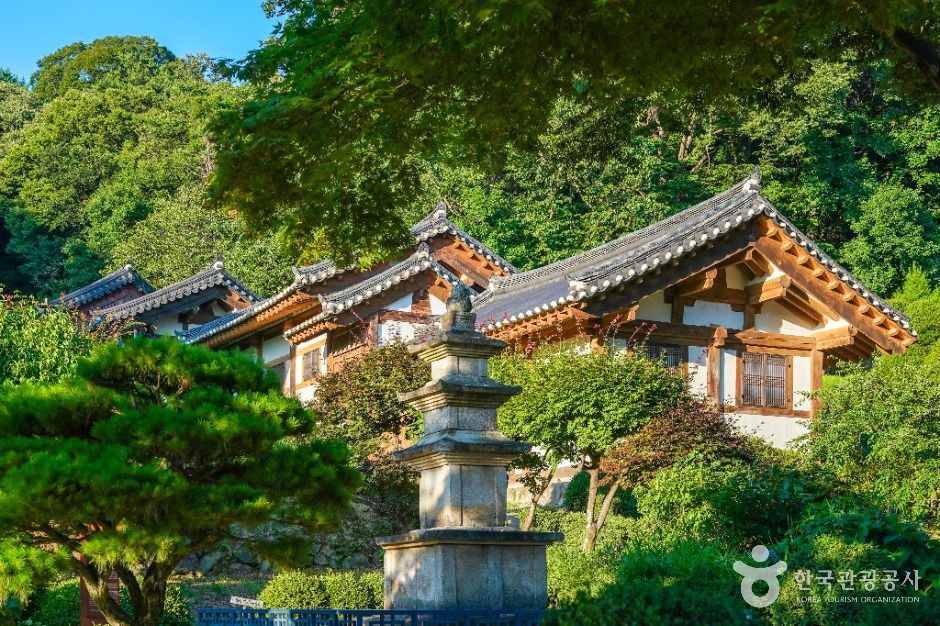
 부석사
At a glance
Good to know now
Parking is available. Phone: 054-633-3464.
Hours
Open at all times.
Closed
Open all year.
Booking
No booking is needed to visit. Klook sells a day tour by train covering Buseoksa, Sosu Seowon, Seonbichon and Museom Village, and KKday sells a same-day tour from Seoul to Buseoksa and Sosu Seowon.
The monk Uisang founded Buseoksa in 676 on the orders of the Silla king, and it became the head temple of the Hwaeom school he brought back from China. The name means 'temple of the floating stone', after a large boulder west of the main hall that is said not to touch the rock beneath it. Muryangsujeon, the main hall, was rebuilt in 1376 after a fire in 1358 and is counted among Korea's oldest wooden buildings; inside sits a Goryeo-era clay Buddha. In 2018 the temple was inscribed on the UNESCO World Heritage List as one of Korea's Buddhist mountain monasteries.
Book ahead
Paid links · These are affiliate links: when you book through them, K for All earns a commission at no extra cost to you. Booking, payment, cancellations and refunds are handled by the booking site — check its final terms before you pay.
Buseoksa Temple · 3 tours & tickets- KlookBuseoksa & Sosu Seowon day tourA day tour by train to Yeongju covering Buseoksa Temple, Sosu Seowon Confucian Academy, Seonbichon and Museom Village, with a hanok lunch.Book
- KKdayYeongju day tour from SeoulA same-day tour from Seoul to Yeongju on a course that visits Buseoksa Temple and Sosu Seowon.Book
- KlookBuseoksa & Sosu Seowon private day tourA private day tour of Buseoksa Temple and Sosu Seowon in Yeongju.Book
Map
Numbers match the list. Map data © OpenStreetMap contributors.
Tips
- Look for the Unified Silla stone lantern in front of Muryangsujeon, then walk to the west side of the hall to find the 'floating stone' and the well said to have housed Uisang's guardian dragon.
- The Josadang murals, which KTO calls the oldest surviving murals painted in a wooden building, are now kept in the temple's relic hall.
Nearby
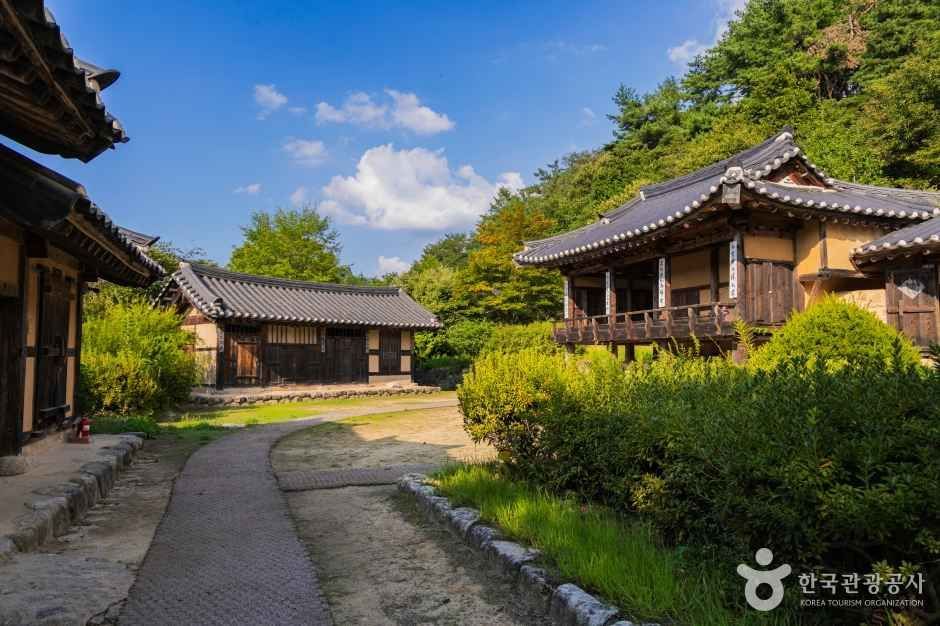 Seonbichon VillageA re-created village of traditional homes beside Sosu Seowon in Yeongju, showing how Korea's classical scholars lived, with hands-on culture programs.
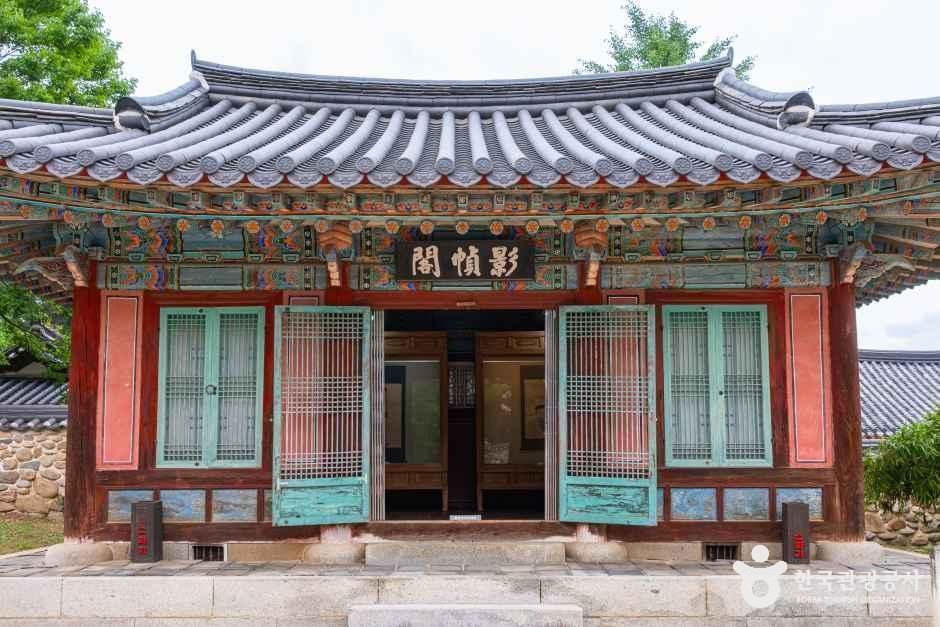 Sosu Seowon Confucian AcademyBegun in 1543 and given its name by the king in 1550, this Yeongju academy is, in KTO's words, Korea's first seowon.
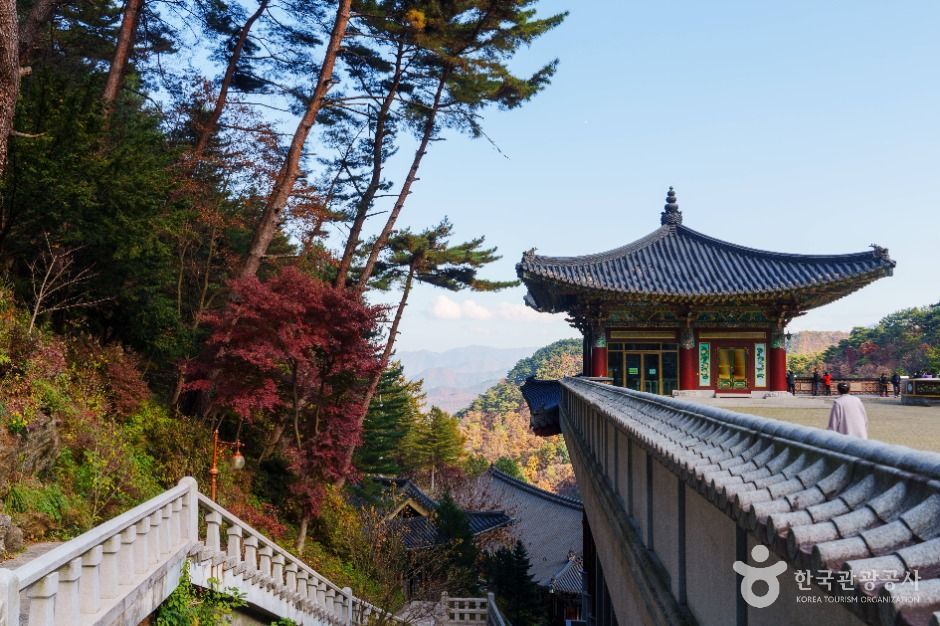 Guinsa TempleHeadquarters of the Cheontae Buddhist order: a dense complex of about 50 modern buildings below Yeonhwabong Peak in the Sobaeksan range.
 Ondal Tourist ParkHistorical drama sets, a limestone cave and a hill fortress, all tied to the legend of Goguryeo general Ondal and Princess Pyeonggang.
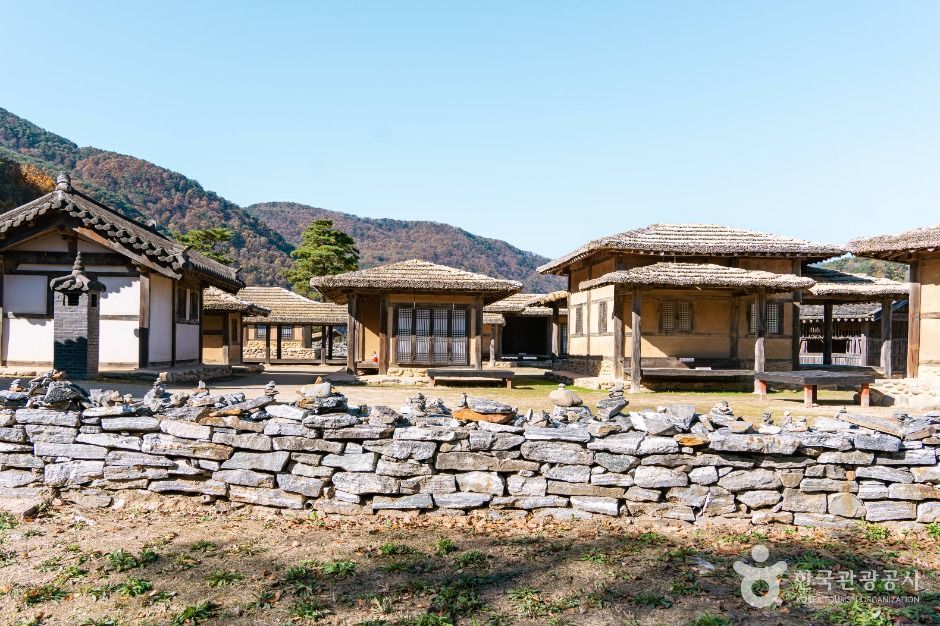
Facts and main photo: Korea Tourism Organization (TourAPI). The photo is used under KOGL Type 1 (Korea Open Government License, attribution). KOGL
Checked Oct 18, 2026